511 hooded cats on Robinhood Chain

Stack stocks.
Every hour.

Burn $CAT to wake your cat, split its payouts across HOOD stock, USDG and CASHCAT, and it collects a share of every hourly fee pot. The earnings bank inside the NFT itself, so a loaded cat sells loaded.

Minted
-
Cats alive
-
$CAT burned
-
Current pot
-
Next round in
-
The collection

Twelve of the five hundred eleven

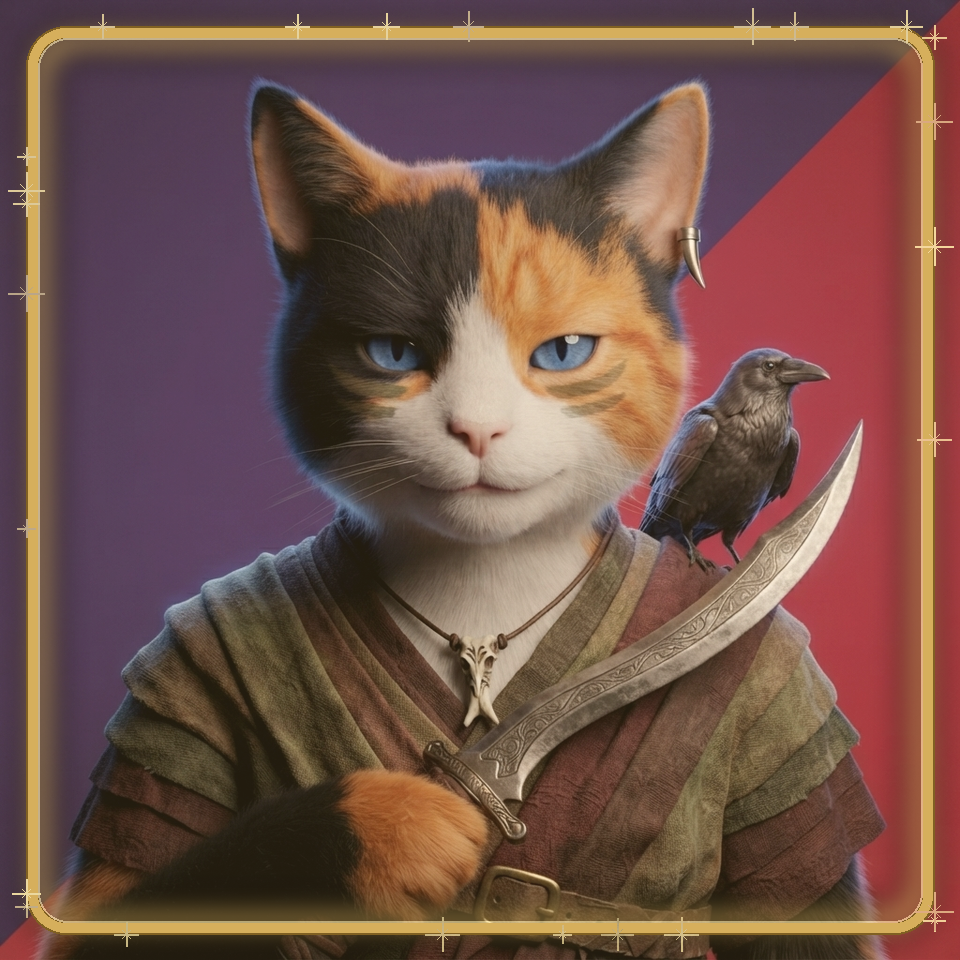
Every HoodCat is a fully rendered hooded assassin, dealt by a sealed on-chain draw across twelve trait axes: fur, eyes, robe, weapon, background, piercings, markings, aura, pendant, expression, scars and companion. Each piece carries a rarity rank from 1 to 511 baked into its metadata, from Common up to the single Secret one-of-one.

The loop

How it works

1

Mint

Flat 0.0025 ETH each, up to 5 per transaction, 511 total. Art is drawn at mint by a fair on-chain shuffle seeded by a block hash that did not exist when you signed. Everyone sees the same sealed card until the whole set reveals at once.

2

Wake it

Burn 25,000 $CAT to activate your cat. Sleeping cats earn nothing. The burn goes to the dead address and never comes back; supply of $CAT only falls.

3

Pick payouts

Split your earnings across three assets: HOOD, the tokenized Robinhood stock; USDG, the stablecoin; and CASHCAT, the chain's memecoin. Any percentages that total 100, changed whenever you like. If you never pick, you earn USDG.

4

Earn hourly

Trading fees from the $CAT token arrive at the engine as ETH. Every full hour the pot spreads over every awake cat by weight, then the engine buys your chosen assets with a 30 minute TWAP price guard and banks them in your cat's vault.

5

Claim free

No claim fee exists and none can be added. Claim directly from the vault, or sign a message and let the keeper pay the gas for you. Either way, assets go only to the current owner of the token.

Selling? The vault is keyed by token id, so banked assets travel with the NFT. Any transfer puts the cat to sleep and the new owner burns 25,000 $CAT to wake it. The tier never resets: it belongs to the token, forever, through every sale.

Weight

Burn more, earn more

Tiers are cumulative $CAT burned into one cat. Upgrades cost only the difference to the next level. There are no refunds and no way down, and the tier is welded to the NFT for life.

Tier I
1.0x
25,000 $CAT
activation
Tier II
1.4x
75,000 $CAT
cumulative
Tier III
1.9x
150,000 $CAT
cumulative
Tier IV
2.5x
300,000 $CAT
cumulative
Tier V
3.5x
850,000 $CAT
the apex
Fusion

Fewer cats, heavier cats

Fuse two or three cats into one. The rarest of the fused cats carries the flag: its portrait wears a silver aura for a two-part fusion, gold for the full three, and the vault, weights and bonus all merge beneath it.
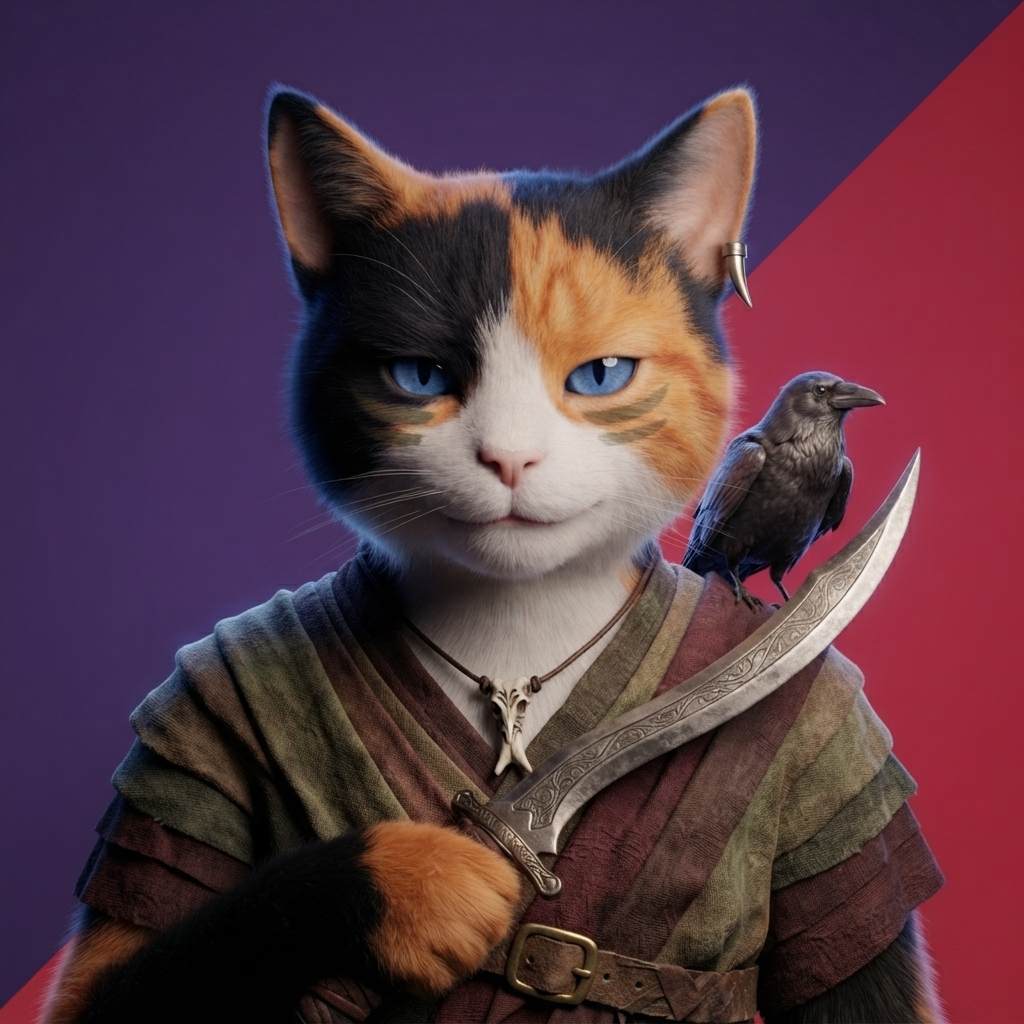
The original HoodCat as minted, before any fusion
Original The cat as minted.
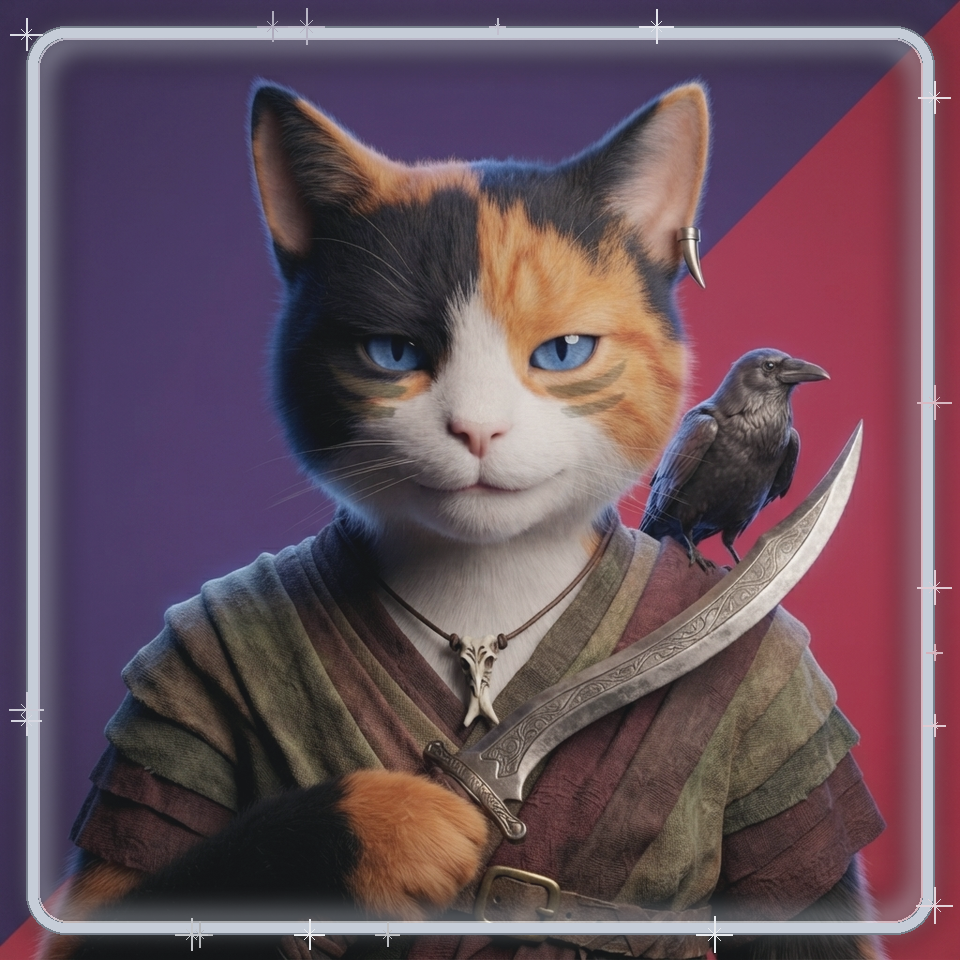
A two-part fused HoodCat: the rarest of the pair framed in the silver aura
2-part fusion Silver aura. The rarest of the pair carries the flag.
A three-part fused HoodCat: the rarest of the three framed in the gold aura
3-part fusion Gold aura. The rarest of the three carries the flag.

Two become one

Fuse 2 of your cats: burn 50,000 $CAT. The first cat survives, the other is destroyed forever. Their weights add, then get a +20% bonus, and the result wears the silver aura.

Three become one

Fuse 3, or add a third to an already fused pair: burn 100,000 more $CAT. Weights add with a +30% bonus, the hard cap, and the result wears the gold aura. Nothing goes past three parts.

Nothing is lost

The absorbed cats' vault balances, undelivered ETH and tier weights all merge into the survivor. The best rarity rank in the fusion decides whose portrait wears the aura.

Supply only shrinks

Fusing is the only way a HoodCat dies and nothing can ever be re-minted. Every fusion makes the collection permanently smaller and every surviving cat's share of the pot bigger.

Every piece carries a rarity rank from 1 to 511, dealt by the same sealed random draw as everything else. Resales carry a 5% royalty to the treasury.

Payouts

The three payout assets

Split each cat's hourly earnings across three assets in any percentages that total 100. HOOD is a tokenized stock: it tracks a price, it is not shares, and it carries no dividends or voting rights.

HOOD token icon
HOOD
Tokenized stock

Robinhood Markets stock, tokenized by Ondo. Own the house's stock while your cat works its floor.

USDG token icon
USDG
Stablecoin

Stable dollars. The default payout if you never set a split, and the quiet half of any portfolio.

CASHCAT token icon
CASHCAT
Memecoin

Cash Cat, the chain's biggest memecoin at a $129M market cap. Maximum torque, maximum risk.

Join the order

Mint a HoodCat

Price per cat 0.0025 ETH
Quantity
Total 0.0025 ETH

Wallets only, max 5 per transaction. You never need $CAT to mint; it is only burned later to activate, upgrade or fuse.

Questions

FAQ

Where does the money actually come from?

From trading. The $CAT token launches separately on the Pons launchpad, and trading it generates creator fees. The team forwards 80% of that fee stream to the rewards engine as ETH every hour. Every awake cat then takes a slice of each hourly pot in proportion to its weight.

Be clear-eyed about this: if nobody trades $CAT, the pot is empty and cats earn nothing. There is no other source of yield, no emissions, no magic.

Do I need $CAT to mint?

No. Minting costs a flat 0.0025 ETH per cat and nothing else. $CAT is only needed later, and only ever as a burn: 25,000 to activate, more to upgrade tiers, and 50,000 or more to fuse. Every burn goes to the dead address permanently.

What happens when I sell my cat?

The transfer automatically puts it to sleep, so the new owner burns 25,000 $CAT to wake it again. Everything else stays with the token: the tier, the fuse bonus, and every asset already banked in its vault. Balances are keyed by token id, not by wallet, so a loaded cat genuinely sells loaded.

What exactly are the three payout assets?

HOOD is Robinhood Markets stock tokenized by Ondo (symbol HOODon on chain). It is designed to track the stock price; it is not shares, carries no dividends and no voting rights, and its peg depends on the issuer and the market. USDG is a stablecoin, with the usual stablecoin caveats. CASHCAT is a memecoin: it can moon and it can go to zero, and nothing about it is stable.

How do the hourly rounds work?

Rounds follow the clock: one per full hour, UTC. Fees that arrive during an hour pay the cats that were awake through that hour. A cat that activates mid-hour starts earning from the next round, which stops anyone activating seconds before the boundary to snipe a pot.

Is claiming really free?

The vault has no fee and no parameter to add one, ever. A direct claim costs you only network gas. A gasless claim costs you nothing: you sign a message, the keeper submits it and pays the gas, and the assets still go only to the token's current owner.

Can the team touch my vault or my cat?

The vault has no admin path: the engine can credit and merge balances, and only the current owner can ever take assets out. Nobody can deactivate your cat, change your tier, or claw back a burn. But the protocol is not trustless end to end; see the next question.

What do I have to trust?

Three things, honestly stated. First, the 80% fee forwarding is an off-chain commitment by the team, not something a contract enforces. Second, the engine owner can rescue ETH and tokens sitting undelivered in the engine, a safety valve that is also a trust point. Third, hourly delivery relies on a keeper being run; if it stalls, earnings pile up as credit until someone delivers. The docs list every power in full.

What if a swap fails during delivery?

Nothing is lost. Every buy is guarded by a 30 minute TWAP price check, so a manipulated pool makes the swap skip rather than execute badly. Skipped value is handed straight back as ETH credit and simply rides into a later delivery.

How does rarity work?

Every piece has a rarity rank from 1 to 511 baked into its metadata, computed from its traits and grouped into tiers: Common, Uncommon, Rare, Super Rare, Ultra-Rare and one Secret one-of-one. The mint draw is seeded by a block hash that did not exist when you signed, and contracts are blocked from minting, so nobody, including the deployer, can aim for a top rank. Every mint has the same odds on the remaining pool.